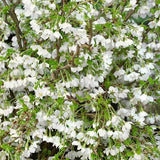
When you think of spring blossom, cherry blossom is right at the top of the list. It's one of those sights that puts a smile on your face and a bit of a bounce in your step, and you really don't need a huge garden to have your own.

The short version
- Ornamental cherries on dwarfing rootstocks stay around 2.5m, so they suit small gardens.
- Kojo No Mai is the one for a pot or a balcony.
- Plant from autumn to early spring in a sunny, well drained spot.
- Prune only if you need to, and do it in summer.
Can you grow a cherry blossom tree in the UK?
Yes, and very happily. Ornamental cherries (Prunus) are hardy, reliable and easy going. The ones we all stop to admire in parks are often great big trees that would never fit in most of our gardens, but that doesn't have to put you off. Modern grafting means you can have all that pretty, delicate blossom on a tree that stays small and well mannered.
Our ornamental cherry trees are chosen with smaller gardens in mind. Most are grafted onto a dwarfing rootstock, which keeps the tree compact (roughly 2.5m or so) while the top does all the flowering. The trickiest part is choosing a colour.
Can you grow a cherry blossom tree in a pot?
You can, and it's a lovely way to grow one. A compact cherry in a large pot on the patio gives you a focal point in spring, leaf colour in autumn and a nice shape the rest of the year. Two in matching pots either side of a door or path look smart too.
Use a big, heavy container so it doesn't blow over, with drainage holes in the bottom, and fill it with a good quality, soil based compost. Trees in pots dry out faster than those in the ground, so keep an eye on watering, especially in the first summer.
For a really small space, Prunus Kojo No Mai (the Fuji cherry) is the one I'd go for. It's naturally small and twiggy with zig-zag stems, and it's covered in pale pink blossom in early spring before the leaves come. It's happy in a pot on a balcony.
Join the P2G Garden Club and we’ll email you each week’s deal, plus the month’s garden jobs. Free to join, unsubscribe any time.
Join the Garden ClubOur favourite cherry blossom varieties
These are the ornamental cherries we've grown and loved over the years. Stock changes through the seasons, so have a look at the collection to see what's available now.
Prunus Brilliant

If white is your colour, Brilliant is beautiful. Pink buds open to single white flowers with a pretty pink centre. It has bags of flower power and the bees love it as much as we do.
Prunus Ruby

Ruby (Prunus nipponica, also called the Japanese alpine cherry) has masses of single pink flowers. It has fantastic autumn colour too, and as it matures the bark takes on a warm copper tone.
Prunus Kanzan

Last but by no means least, Kanzan is an absolute showstopper and probably my favourite. It has fancy double pink flowers and leaves that open bronze, turn green for summer and then go shades of marmalade in autumn.
Why we love cherry trees in small gardens
- Lots of blossom in spring, which is an early source of food for bees and other pollinators
- Gorgeous leaf colour in autumn
- Small berries on some varieties that the birds enjoy
- A good shape that adds structure all year round
- Reliable and low maintenance, giving a display year after year
If you'd like cherries you can eat yourself, have a look at our fruit trees instead. The berries on ornamental cherries are best left for the birds.
How to plant a cherry blossom tree
Autumn to early spring is the best time to plant, as long as the ground isn't frozen or waterlogged. Pick a sunny spot. Cherries aren't fussy about soil, but they don't like sitting wet, so avoid anywhere that stays soggy in winter.
Dig a hole slightly larger than the rootball and plant the tree at the same depth it was in its pot. We add a little slow release fertiliser to the hole to give it the best start. Firm the soil around it, put in a stake and tie if it's in an open spot, and give it a really good water. Keep it well watered through its first year while the roots settle in.
Do you need to prune a cherry blossom tree?
Very little. Just take out any dead, damaged or crossing branches to keep a nice open shape. If you do prune, do it in summer when the tree is growing strongly rather than in winter, as cherries are more prone to disease getting into cuts made when they're dormant.
Whichever you choose, it'll be a winner, and come spring you'll wonder why you didn't plant one sooner.
Happy gardening,
Lou