Well. That was a summer.
Five heatwaves, a July with barely a drop of rain (the driest since records began, apparently), and by the middle of August 71% of England was officially in drought. Nine water companies have hosepipe bans running and about 29 million of us have spent the last 2 months watering with a can. My arms have never looked better.
The garden has taken it on the chin. Brown lawns, crispy hydrangeas, roses that gave up flowering weeks ago, pots that dried out faster than you could fill them. If yours looks a bit sorry for itself right now, you're in very good company.
The good news is that a lot of what looks dead isn't. And autumn is the best window of the whole year for putting things right. Here's what I'd do, roughly in this order.
The short version
- Leave everything in the ground until the end of September.
- Don't water or feed a brown lawn. Repair it once it greens up.
- Water at the base, weed, and hold off feeding and mulching until it rains.
- Soak dried-out pots from the bottom.
- Fill the gaps this autumn with plants built for dry summers.
- Get a water butt on every downpipe you can reach.
First, don't rip anything out yet
Plants shut down to survive heat. They drop leaves, go brown and sulk, and it looks awful. But the roots are usually fine, and most of it wakes up again once the rain comes.

The scratch test tells you what's really going on. Scrape a bit of bark off a stem with your thumbnail. Green underneath means it's alive, so leave it. Brown and dry means that stem has gone, but check lower down before you write off the whole plant. Hydrangeas, fuchsias and a lot of shrubs will look finished and then push out new growth from the base in September.
Give everything a few weeks of proper rain before you decide. Anything still showing no green by then has probably had it, and a gap in the border is a chance. More on that further down.
The lawn will sort itself out
Brown grass is dormant grass. A lawn that's gone the colour of a digestive biscuit is doing exactly what it's meant to do, and it will green up within a couple of weeks of proper rain without you lifting a finger.
So don't water it or feed it, and try to keep off it. Walking on bone-dry turf snaps the buds it's waiting to regrow from, and garden furniture left in the same spot all summer leaves a dead square underneath. Move the chairs.
Once it's green again, which for most of us means mid to late September, that's the moment for the proper repair job. Rake out the dead thatch. Spike it all over with a garden fork, 10cm or so deep, to open up the compacted soil. Overseed the bald patches, cover lightly with compost, and keep them damp until the new grass shows. Then an autumn lawn feed (low nitrogen, high potassium, it'll say autumn on the box) to build roots rather than leaves before winter.
Leave the mower height up for the rest of the year. Around 4cm is fine.
Join the P2G Garden Club and we’ll email you each week’s deal, plus the month’s garden jobs. Free to join, unsubscribe any time.
Join the Garden ClubBorders: tidy up, water at the base, and wait for rain before you feed
Cut off anything crispy. Scorched leaves and dead flower stems aren't coming back and they make the whole bed look worse than it is. Secateurs, and a light touch. Hard pruning now forces soft new growth right when the plant has no water to support it, so save the big cuts for their proper season.

Water the plants that matter with a can, slowly, right at the base. One good soak that gets down to the roots does more than a daily sprinkle over the leaves, which mostly evaporates before it gets anywhere. Anything you planted this year gets first call, then pots, then the established stuff, which is tougher than it looks. A mature shrub with a decent root system will mostly shrug this off. Washing-up water is fine on the borders too, just keep it off anything you're going to eat.
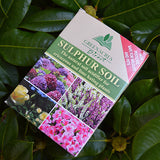
Two jobs to hold off on until it has rained properly. Feeding, because dry soil can't take up fertiliser, so it either sits there or washes away in the first downpour. And mulching, because a thick layer on dry soil stops the rain getting in. Once the ground is wet again both become the best jobs of the autumn. A mulch of compost or well rotted manure over damp soil holds the moisture in for months, and if your soil needs a bit of help, Sulphur Soil is a good place to start.
Do weed, though. Weeds are drinking what little water there is, and they're setting seed while you're not looking.
Pots need a proper drink
Compost that has dried right out goes hard and shrinks away from the sides of the pot. After that, water just runs down the gap and out of the bottom. You can pour a whole can in and the roots get almost none of it.
Stand the pot in a bucket, a trug or the grandkids' paddling pool with a few inches of water and leave it for a couple of hours to soak up from the bottom. Big pots you can't lift, water slowly in stages: a little, wait 10 minutes, a little more. Once things are damp again, a top-dressing of fresh compost and a slow-release feed, and most container plants bounce back surprisingly fast.
If the summer bedding in them is finished, it's finished. Pull it out and give the pot something that will look good right through to Christmas.
A gap is a chance
Some things won't make it. Lavender that has gone woody and brown right through, bedding that has cooked, that one shrub that never did well even in a normal year. Compost it (or bin it if it's diseased) and don't feel bad about it.
Every gap is a spot for something that will cope better with the next dry summer. And there will be one. This is the third drought we've had in 5 years.
Autumn beats spring for planting, and by a distance
The soil is still warm from summer, the air is cooler so plants aren't stressed, and the rain (it is coming, I promise) does the watering for you. Roots keep growing right through the winter, so by next spring the plant is already settled in and ready to go. A shrub planted in October needs far less watering next summer than the same shrub planted in April.
Bigger, established plants have a head start here too, which is partly why we sell them the size we do. A 3 litre perennial or a 4.5 litre shrub has a root ball that gets going straight away.
So while the soil is still workable: shrubs, perennials, and spring bulbs. Daffodils and alliums are best in by now, but there's still time if you're quick. November is the month for tulips, because the colder soil helps keep tulip fire away.
Planting for the next dry summer
If you're filling gaps anyway, fill them with plants that were built for this. A lot of the best garden plants come from the Mediterranean and other hot, dry places, and they sailed through this summer while the hydrangeas wilted.

The ones I'd put in first:
- Lavender. Obviously. Give it sun and drainage and never feed it.
- Hardy geraniums. Rozanne barely noticed the heat.
- Agapanthus. Loves a baking spot and hates wet feet.
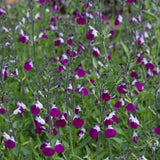
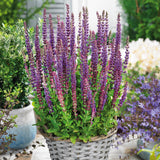
- Salvias. Amethyst Lips and East Friesland especially. Bees all over them.
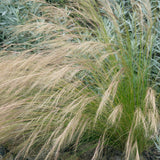
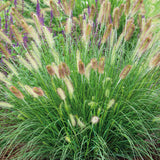
- Ornamental grasses. Stipa Ponytails and Pennisetum Hameln look better in a dry year than a wet one.
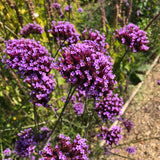
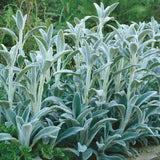
- Verbena bonariensis, Nepeta, Stachys Silver Carpet and Euphorbia. Silver or grey leaves are the giveaway. Those fine hairs and waxy coatings are the plant's own sun cream.
We've put all of these together in one place, our drought tolerant collection, so you don't have to hunt.
Group them in the sunniest, driest bed, and keep the thirsty things (hydrangeas, hostas, astilbes) in the shadier, damper corners where they can share a watering can. Right plant, right place is most of the game.
Whatever you plant this autumn, mulch it once it's in and the ground is wet. It's the single most useful thing you can do for next summer.
Catch the rain while it's falling
Water butts. If you've got one, clean it out now while it's empty so it's ready for the autumn rain. If you haven't, get one on every downpipe you can reach. They fill surprisingly quickly once the autumn rain starts, and after this summer I'd want every drop.
That's the plan
Nothing here is complicated. Most of it is tidying and waiting for rain, then planting into warm soil. The garden has had a rough summer, but it has had them before, and gardens are far better at recovering than we give them credit for.