The summer baskets have had it. The petunias went soggy weeks ago, the geraniums are hanging on out of sheer stubbornness, and every time I walk past the front door I think, I really must do something about that.
So this is the something. A winter basket or a pot by the door is the easiest bit of colour you'll get between now and March, and it doesn't take much. Most of what you need is in our autumn and winter bedding, plus a shrub if you've got a bigger pot to fill.
The short version
- Violas, pansies, primroses and cyclamen are the backbone of a winter basket.
- In a pot, add one evergreen shrub for the middle and fill round it.
- Plant them close together, as they hardly grow until spring.
- Water only when the compost feels dry, and don't feed until spring.
What can I plant in a winter hanging basket?
Small, tough plants that flower in the cold, or have leaves that still look good in January. These are the ones I'd recommend:
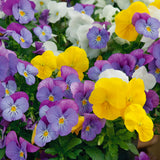
- Violas and pansies are the backbone of any winter basket. They flower on and off right through to spring and only stop to sulk in the very coldest spells. Viola Mixed Colour gives you a bit of everything. Pansy Prim Up Yellow Red Blotch has big yellow flowers with a red face, and we picked it for how hard it flowers.
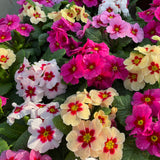
- Primroses come in a little later and carry on into spring. Raspberry Rose Mix is raspberry, apricot and blush pink, and it's a proper perennial, so it'll come back next year too. Mix them with violas and there's something in flower the whole time.
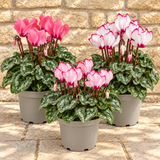
- Cyclamen are perfect for the middle of a basket. Our Halo collection has salmon, white and pale pink flowers with a darker edge, from October right through to March. They're the bigger flowered sort that doesn't love a hard frost, so they're happiest in a basket close to the house.
- Something leafy gives the flowers something to sit against. A small heuchera works, or a tuft of Festuca Elijah Blue, the little blue grass that goes a bit greener over winter.
The one thing we don't sell is something to trail over the edge. If you've got ivy in the garden, a few rooted bits pulled up from the bottom of a wall do the job beautifully, and they're free.

You'll find these and plenty more in our bedding plants for hanging baskets.
What are the best plants for winter pots?
A pot gives you room for a shrub, and that's what keeps a winter pot looking good in February when the flowers have had a rough week. Choose one evergreen for the middle, then fill round it with the same bedding as above.
The evergreens I'd happily put in a pot by the door:
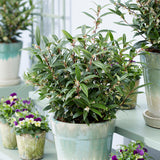
- Sarcococca Purple Gem stays small and smells wonderful. The flowers are tiny and pinkish, and you'll smell them before you see them.
- Viburnum tinus Eve Price has deep pink buds that open to pink and white flowers through the winter. It gets bigger, so give it a big pot.
- Nandina Obsessed for red leaves, which colour up more as the weather gets colder.
- A dwarf conifer. Juniperus Compressa is a slim little upright pencil and Pinus mugo Pumilo is a low, rounded pine. Both grow at a snail's pace, so they'll sit in a pot for years.
- Pieris Mountain Fire for a shady spot. It needs ericaceous compost, which is easy in a pot even if your garden soil is wrong for it.

The rest are in our shrubs for pots and containers. The shrub is the part you keep. Come spring, you swap the bedding round it and it carries on for years.
Join the P2G Garden Club and we’ll email you each week’s deal, plus the month’s garden jobs. Free to join, unsubscribe any time.
Join the Garden ClubFour winter pots and baskets to copy
If you'd like a starting point, these all use plants we've got in at the moment.
A scented pot by the front door
Sarcococca Purple Gem in the middle, a Heuchera Silver Scrolls either side for the silver leaves, and Primrose Provence round the edge. The primroses are lightly scented too, so it's a nice pot to come home to. Happy in sun or light shade.
A sunny patio pot
Juniperus Compressa for height, two or three Festuca Elijah Blue round it, and Pansy Prim Up in the gaps. Blue and yellow on a grey day is very cheering. The festuca wants as much sun as it can get.
A shady corner
Pieris Mountain Fire in ericaceous compost, the Halo cyclamen in front of it, and Viola Mixed Colour round the edge. Cyclamen and violas both cope fine with a bit of shade, and the pieris gives you bright red new leaves in spring as a bonus.
A hanging basket
Three cyclamen in the middle, Raspberry Rose primroses between them, violas all the way round the edge, and a few bits of ivy tucked in to trail over. Nothing fancy, and the violas will still be going when you take it down in spring.

When should I plant winter baskets and pots?
As soon as the summer plants come out. September and October are ideal, because the compost is still warm and the new plants settle in before it turns properly cold. November is fine too. Pick a dry, mild day and try to get them in before the first hard frosts.
How to plant them so they look full
- Go bigger if you can. More compost means the roots stay a little warmer and the pot doesn't dry out or freeze through as quickly. Our pots and planters are here if yours have seen better days.
- Check the drainage. Make sure there are holes and they're not blocked, and put a few crocks over them. Soggy compost kills far more winter pots than the cold does.
- Use fresh compost. Last summer's is tired out. Ericaceous for the pieris, ordinary potting compost for the rest.
- Plant them close. Winter plants hardly grow at all until spring, so what you plant is what you get. Pack them in so they're almost touching. One pack of 20 violas fills a decent basket, usually with a few left over for a little pot by the step.
- Add bulbs underneath. If you've got a few spare in the shed, pop them in under the bedding for a second show in spring. There's more on that in when and how to plant bulbs.
- Water them in. One good drink when you've finished planting, then leave them be.
Do winter hanging baskets need watering?
Much less than in summer, but yes, now and again. Rain does most of the work. The ones that catch people out are baskets under a porch or tight against the house, where the rain never reaches.
Push a finger into the compost every week or so and only water when it feels dry. Mild, breezy spells dry them out quicker than you'd think. Water in the morning, so the compost isn't sitting wet overnight if a frost comes. There's more on this in how often should I water my plants.
Do I need to feed them?
No. Plants in winter pots aren't growing, so they don't need it, and fresh compost has plenty in it to see them through. Give them a slow release feed in spring when they start growing again.
Looking after them through the winter
Pick off the faded flowers on your violas and pansies every week or so. It takes two minutes with a cuppa in the other hand and keeps them flowering.
Stand pots on pot feet or a couple of bits of wood. The water drains away better, and a pot that isn't sitting in a frozen puddle is less likely to crack.
Baskets have it tougher than pots, because the cold gets at them from every side. If a really hard frost is forecast, lift the basket down into a porch, shed or garage for a night or two, especially if it has cyclamen in it.
Taller shrubs in pots catch the wind, so tuck them into a corner or against a wall if you're somewhere exposed. And if it snows, knock it off the evergreens before it weighs the branches down.
What happens in spring?
The violas and pansies will keep going until late spring, and the primroses can go into a shady bit of the border to come back next year. The shrub stays where it is. Clear the bedding from round it, add a bit of fresh compost and plant summer flowers in its place (there's a guide to when to plant summer bedding, so you don't jump the gun like I always want to).
For more plants that look good now, have a look at winter colour in the garden, and if your pots tend to struggle, the 7 container mistakes everyone makes is worth a read.
Happy planting!
Lou